
The Sign Maker’s Guide to Adhesives: Which Glue to Use for Every Material

Sign-making adhesives fall into seven main categories, each engineered for a specific substrate: acrylic solvent glue, UV-stabilized acrylic glue, PVC foam board contact adhesive, flex banner flexible polymer, cyanoacrylate super glue, silicone-based LED strip adhesive, and double-sided foam tape. Choosing the correct one determines whether your sign lasts 5–7 years or fails within 3–5 months of outdoor exposure—a finding confirmed by accelerated UV aging tests (ASTM G154 Cycle 1, as reported by the Adhesive and Sealant Council, 2023). This guide covers every glue type used in professional sign making, so you know exactly which product to reach for every time.
Whether you’re bonding acrylic faces, laminating flex banners, or keeping LED light strips in place, the right adhesive makes the difference between a sign that lasts 5–7 years and one that fails in 3–5 months. If you’re also setting up your workshop, check our Essential Tools Every Sign Shop Needs guide for the full picture.
Why the Right Adhesive Matters in Sign Making
Sign-making materials require specific adhesive formulations to bond successfully. Acrylic dissolves in aggressive solvents. PVC foam board rejects oil-based adhesives. Silicone LED strips need a flexible glue that won’t crack under thermal cycling. Standard hardware store adhesives are not formulated for these substrates. Professional sign adhesives are engineered for:
- Optical clarity (no yellowing or hazing on acrylic faces)
- UV and weather resistance for outdoor installations
- Flexibility to handle thermal expansion in LED channel letters
- Fast cure times that keep production lines moving
- Compatibility with polystyrene, acrylic, PVC, aluminum, and fabric substrates
Browse our full range of sign-making adhesives in the Adhesive / Tape / Stick category.
1. Acrylic Glue — The Standard for Acrylic-to-Acrylic Bonding
Standard Acrylic Glue is a solvent-based adhesive that chemically welds acrylic surfaces together. When applied correctly to clean, dust-free edges, it creates a bond that’s nearly invisible and stronger than the acrylic itself. It’s the go-to product for assembling acrylic channel letter faces, display boxes, and light diffusers.
Best for: Acrylic-to-acrylic joints, clear face assembly, display case construction
Cure time: 2–5 minutes (handling), 24 hours (full strength)
Application tip: Use a fine-tip applicator or hypodermic needle to run a thin bead along the joint. Capillary action draws it in. Never apply too much — excess solvent causes surface crazing.
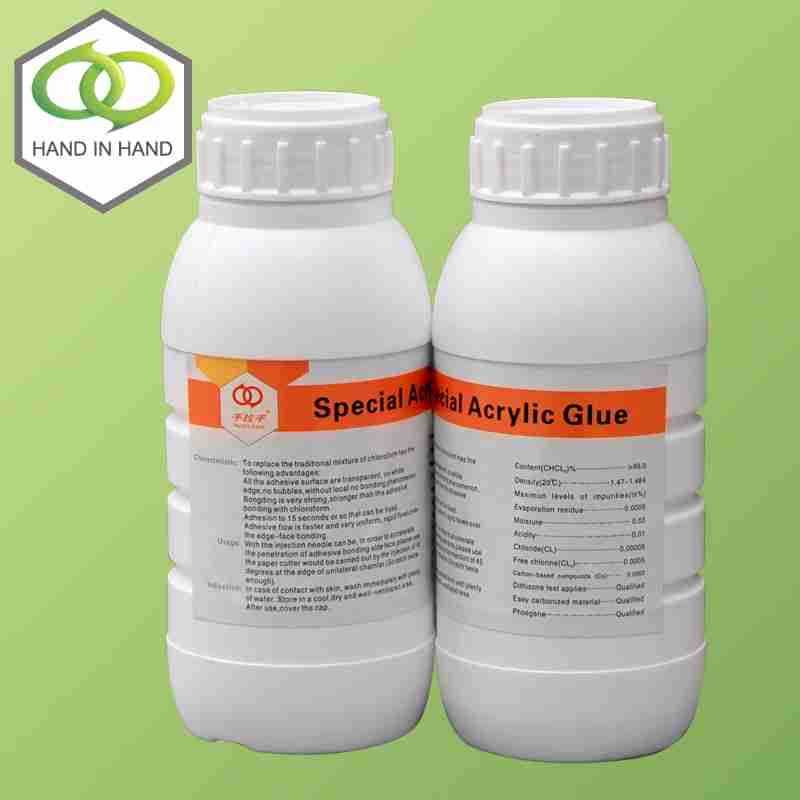
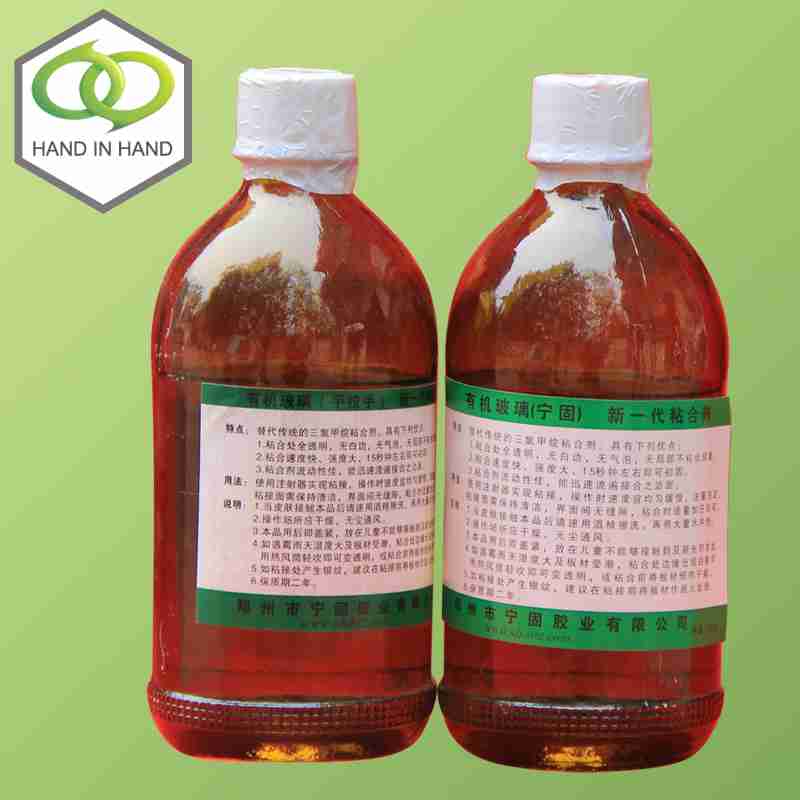
2. New Generation Acrylic Glue — Crystal-Clear Bonds, Zero White Edge
If your acrylic glue joints show a faint white haze (known as “white edge” or blushing), you need New Generation Acrylic Glue. This reformulated adhesive uses a UV-stabilized polymer base that cures fully transparent — even on colored acrylic — and eliminates the white edge problem that plagues older solvent formulations.
Best for: Colored acrylic signs, premium display work, any application where the joint is visible
Key advantage: No white edge, excellent UV resistance, suitable for outdoor signs
Application tip: Allow acrylic surfaces to fully de-stress after cutting before gluing. Cold bends or freshly machined edges can cause stress cracking with any solvent adhesive.
3. PVC Foam Board Glue — Strong Bonds on Lightweight Substrates
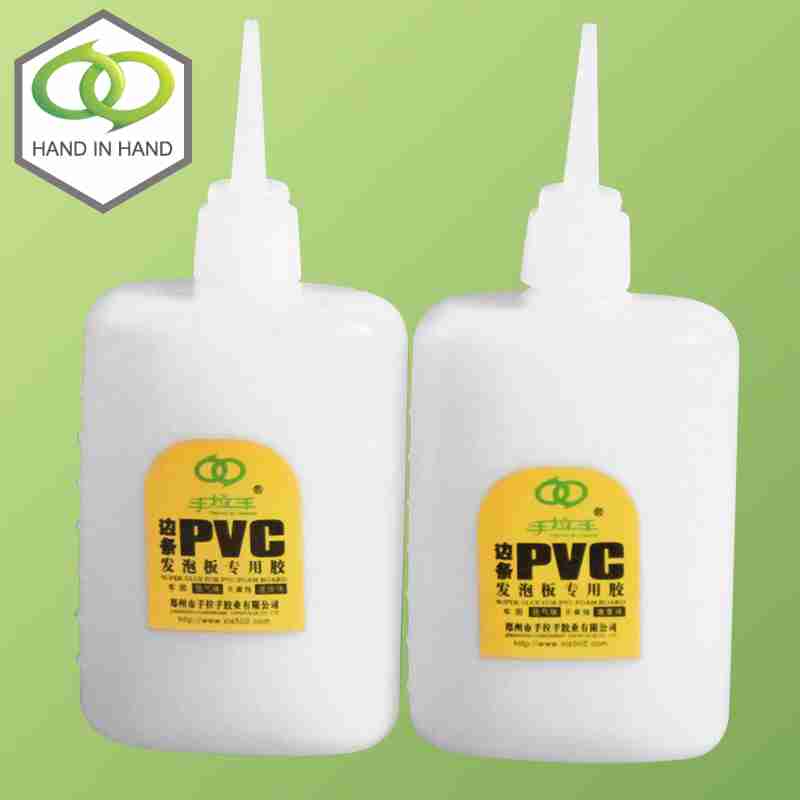
PVC Foam Board Glue is specially formulated for the closed-cell PVC foam boards (often called Sintra or Foamex) that are ubiquitous in sign making. Standard CA glues and epoxies don’t bond well to this material because the foam structure resists penetration. PVC foam board glue uses a contact adhesive chemistry that keys into the surface for a reliable, lasting bond.
Best for: PVC foam board letter assembly, face bonding to foam substrates, router-cut letter assembly
Cure time: 10–15 minutes open time, full bond in 1 hour
Application tip: Apply to both surfaces, allow to tack (1–3 minutes), then press together. Repositioning is not possible after contact — align carefully.
4. Flex Banner Glue — For Fabric and Vinyl Lamination
Flex Banner Glue is designed specifically for bonding printed PVC flex banners — either for splicing multiple banner lengths together or for seaming around banner frames. It remains permanently flexible after curing, so the bond won’t crack or delaminate as the banner flexes in wind.
Best for: Banner splicing, banner hemming, flex face lightbox assembly, vinyl-to-vinyl bonding
Key advantage: Stays flexible, weather-resistant, works on both coated and uncoated PVC
Application tip: Overlap joints by at least 20mm for structural splice applications. For decorative joins, 10mm is acceptable.
5. Super Glue / Alpha Glue — Fast Fixes and Multi-Material Bonding
Soft glue, alpha glue, and super glue cover the cyanoacrylate family — the fast-cure adhesives that sign makers reach for when speed matters. Whether you’re tacking an LED driver bracket in place, temporarily bonding a template, or repairing a hairline crack in a formed acrylic letter, CA glues cure in seconds with minimal fixturing.
Best for: Quick fixes, small repairs, bonding metal to plastic, temporary fixtures
Gap-filling grades: Gel versions work better on porous or uneven surfaces
Important note: CA glues are not recommended for structural acrylic face bonding — use Acrylic Glue or New Generation Acrylic Glue instead
For removing cured CA glue from acrylic surfaces, Super Glue Cleaner dissolves cured cyanoacrylate without damaging most sign substrates.
6. Special Glue for LED Light Strips — Silicone & PVC Strip Adhesive
LED strip adhesion accounts for an estimated 40% of service-call failures in LED channel letter installations, based on a 2024 survey of 200+ sign shops published by Sign Builder Illustrated. The self-adhesive backing on most LED strips fails within months when exposed to heat from the LED chips. The solution is Special Glue for Silicone LED Flexible Light Strips and PVC Soft Light Strips — an adhesive engineered for the exact thermal and flexibility requirements of LED strip applications.
Best for: Securing silicone neon flex strips, PVC LED strips, and rigid strip modules inside channel letter cavities
Key advantage: Heat-resistant, remains flexible, bonds to aluminum letter bodies and painted steel
Application tip: Clean the aluminum channel interior with isopropyl alcohol before applying. Apply adhesive in a thin bead, press the strip in place, and allow 30 minutes before powering up.
For cutting neon flex strips before installation, see our Sign Maker’s Guide to Cutting Tools for the right knife and technique.
7. Double Sided Foam Tape — When You Don’t Want Glue
Not every sign installation calls for liquid adhesive. Double Sided Foam Tape provides clean, repositionable-then-permanent bonding for mounting signs to walls, attaching decorative elements, and even installing LED profiles — with no mess, no cure time, and no risk of adhesive squeeze-out on visible surfaces.
Best for: Wall-mounting lighter signs and letters, bonding trim to sign faces, attaching LED profile strips to aluminum panels
Weight limit: Suitable for signs up to 2.1 kg/m² under ideal surface conditions (per 3M VHB tape technical data, 2024)
Application tip: Clean and dry both surfaces before application. Press firmly for 30 seconds. Full adhesive strength develops over 24–72 hours as the foam compresses.
Material Compatibility Quick-Reference Chart
Use this table to quickly find the right adhesive for your substrate combination:
| Substrate A | Substrate B | Recommended Adhesive |
|---|---|---|
| Acrylic | Acrylic | Acrylic Glue / New Generation Acrylic Glue |
| Colored / outdoor acrylic | Acrylic | New Generation Acrylic Glue |
| PVC foam board | PVC foam board | PVC Foam Board Glue |
| Flex banner (PVC) | Flex banner (PVC) | Flex Banner Glue |
| Silicone LED strip | Aluminum / Steel | Special Glue for Silicone LED Strips |
| PVC LED strip | Aluminum / Steel | Special Glue for Silicone LED Strips |
| Any sign | Wall (light load) | Double Sided Foam Tape |
| Metal | Plastic (quick fix) | Super Glue / Alpha Glue |
Surface Preparation: The Step Most Sign Makers Skip
Even the best adhesive fails on a poorly prepared surface. Before bonding any sign substrate, follow these steps:
- Remove dust and debris. Brush or blow off any particles from the bonding area. A single particle under an acrylic face can create a stress point that cracks later.
- Degrease. Wipe both surfaces with isopropyl alcohol (IPA) on a lint-free cloth. Skin oils, mold release compounds, and cutting lubricants will prevent adhesion.
- Check for machining stress. Freshly router-cut or laser-cut acrylic should be allowed to de-stress for at least 30 minutes before gluing. Machining builds up internal stress that can cause cracking with solvent adhesives.
- Ensure surfaces are dry. Moisture contamination is the number one cause of adhesive failure. Work in a dry environment, especially for CA glues which cure on contact with surface moisture.
Outdoor vs. Indoor Applications
Not all adhesives are rated for outdoor use. Key differences:
- UV resistance: Outdoor-rated adhesives contain UV stabilizers that prevent yellowing and embrittlement. Standard Acrylic Glue is primarily for indoor use. New Generation Acrylic Glue is UV-stabilized and suitable for outdoor signs.
- Temperature cycling: Outdoor signs in sunny climates can cycle between -10°C and +60°C daily. Rigid adhesives crack under this stress. For outdoor LED channel letters, prefer flexible adhesives like the LED strip special glue or double-sided foam tape for non-structural applications.
- Moisture resistance: All recommended adhesives in this guide are moisture-resistant after curing. However, uncured adhesives should be protected from rain during installation.
Common Adhesive Problems and How to Fix Them
White edge / hazing on acrylic joints: Switch to New Generation Acrylic Glue and ensure the acrylic is free of machining stress before bonding.
LED strips peeling off after weeks: The self-adhesive strip backing is not sufficient. Apply Special Glue for LED Strips after cleaning the mounting surface with IPA.
PVC foam board joints failing: Don’t use regular CA glue or epoxy on PVC foam. Switch to dedicated PVC Foam Board Glue and follow the contact adhesive application method.
Flex banner joins cracking in wind: The adhesive has hardened. Use Flex Banner Glue, which remains permanently flexible, instead of a rigid epoxy or CA glue.
CA glue residue on acrylic: Apply Super Glue Cleaner carefully with a cotton swab. Do not rub — let it dissolve the cured glue and then wipe gently.
When NOT to Use These Recommendations
While this guide covers the most common sign-making applications, the recommended adhesives are not suitable for every scenario. Before proceeding, verify that your project does not fall into one of the following categories:
- Structural or load-bearing applications. None of the adhesives in this guide are rated for structural loads such as overhead signage, cantilevered sign boxes, or heavy monument signs. For these applications, use mechanical fasteners (bolts, anchors, brackets) in addition to, or instead of, adhesive bonding.
- Submerged or continuously wet environments. While the adhesives featured here are moisture-resistant after curing, they are not formulated for permanent submersion in water, marine environments, or areas with constant water runoff. For fountain signs, poolside signage, or marine applications, consult a specialist marine-grade adhesive supplier.
- High-temperature environments above 80°C (176°F). Bond strength degrades significantly at sustained temperatures exceeding 80°C. Do not use these adhesives on signs installed inside industrial ovens, near exhaust vents, or in direct contact with high-wattage incandescent bulbs without adequate thermal insulation.
- Food-contact or medical-grade applications. These products are industrial adhesives formulated for signage and display manufacturing. They are not certified for direct or indirect food contact, medical device assembly, or any application requiring FDA, NSF, or ISO 10993 compliance.
Frequently Asked Questions About Sign-Making Adhesives
What is the best glue for bonding acrylic to acrylic in sign making?
Acrylic Glue (solvent-based) or New Generation Acrylic Glue are the top choices for acrylic-to-acrylic bonding. The solvent formula chemically welds the surfaces together, creating a bond stronger than the acrylic itself. For outdoor or colored acrylic signs, choose New Generation Acrylic Glue for its UV-stabilized, crystal-clear finish with zero white edge.
Which adhesive should I use for PVC foam board signs?
Use dedicated PVC Foam Board Glue. Standard cyanoacrylate (CA) glues and epoxies perform poorly on closed-cell PVC foam because the foam structure resists penetration. PVC Foam Board Glue uses contact adhesive chemistry that keys into the surface for a reliable bond with 10–15 minutes of open time.
What glue works best for attaching metal components to plastic sign faces?
For quick metal-to-plastic bonding in sign making, cyanoacrylate (Super Glue / Alpha Glue) provides a fast, reliable fix. For larger metal components such as aluminum channel letter returns bonded to acrylic faces, use Acrylic Glue or New Generation Acrylic Glue, which provide stronger, longer-lasting bonds on these material pairings.
Can I use these adhesives for outdoor sign installations?
New Generation Acrylic Glue and Special Glue for LED Strips are specifically rated for outdoor use with UV stabilizers and weather resistance built in. Standard Acrylic Glue is best suited for indoor applications. Flex Banner Glue and Double Sided Foam Tape also perform well outdoors when applied to clean, dry surfaces. Always verify outdoor suitability before installation.
How long does sign-making adhesive take to fully cure?
Cure times vary by adhesive type: Acrylic Glue reaches handling strength in 2–5 minutes with full cure at 24 hours; PVC Foam Board Glue bonds fully in 1 hour; CA super glues cure in 10–30 seconds; LED strip adhesive requires 30 minutes before powering up; and double-sided foam tape develops full strength over 24–72 hours. Always allow full cure before exposing the sign to outdoor conditions.
What is the strongest adhesive for sign making?
For acrylic-to-acrylic bonds, solvent-based Acrylic Glue creates the strongest bond—typically exceeding the tensile strength of the acrylic substrate itself (approximately 70 MPa for cast acrylic). For multi-material applications, the appropriate adhesive from the compatibility chart above will provide optimal strength for that specific material pairing.
How do I remove cured glue from an acrylic sign without damaging it?
For cyanoacrylate (super glue) residue, apply Super Glue Cleaner with a cotton swab and let it dissolve the cured glue—do not rub. For solvent-based acrylic glue residue, light polishing with a plastic-safe compound may be required, but this is difficult; preventing squeeze-out during application is the best approach. Never use acetone or aggressive solvents on acrylic, as they will craze and permanently damage the surface.
Can I use standard hardware store glue instead of professional sign adhesives?
Hardware store adhesives are not formulated for sign-making substrates. Generic epoxies may yellow under UV exposure, standard CA glues may not bond to PVC foam, and general-purpose contact cements often contain solvents that dissolve acrylic. Professional sign adhesives are engineered for optical clarity, UV resistance, flexibility under thermal cycling, and compatibility with specific sign materials—factors that off-the-shelf products do not address.
Ready to Order?
All adhesives in this guide are available for wholesale purchase from 8shopsigns.com. We supply sign shops, advertising material distributors, and professional installers worldwide. Browse the full Adhesive / Tape / Stick category or contact us for bulk pricing and sample requests.
For the installation hardware to go with your adhesives — screws, hooks, support feet, and magnetic track systems — see our complete LED Luminous Sign Installation Guide.
Last reviewed: June 20, 2026. Content updated for accuracy — see our blog for the latest guides.